What are the applications of electronic scale molds in the field of commercial electronics
The core demands of the commercial electronics field for electronic scales are focused on structural stability, measurement accuracy, environmental adaptability, and feasibility of mass production. Electronic scale molds serve as the core manufacturing carrier, providing customized molding solutions for segmented scenarios such as retail trade, logistics warehousing, industrial metrology, and cate
The core demands of the commercial electronics field for electronic scales are focused on structural stability, measurement accuracy, environmental adaptability, and feasibility of mass production. Electronic scale molds serve as the core manufacturing carrier, providing customized molding solutions for segmented scenarios such as retail trade, logistics warehousing, industrial metrology, and catering services through targeted structural design, material adaptation, and precision control. This covers the production of key components for various types of commercial electronic scales. The following provides a detailed analysis based on specific scenarios and technical adaptations:
1����、 Retail trade field: Application of molds for pricing scales/cash registers
Supermarket pricing scales, fair market scales, convenience store checkout scales, and fruit store accurate pricing scales in retail scenarios need to deal with complex situations such as high-frequency use, heavy object placement, and humid environments. The design core of electronic scale molds revolves around "durability+operational adaptability".
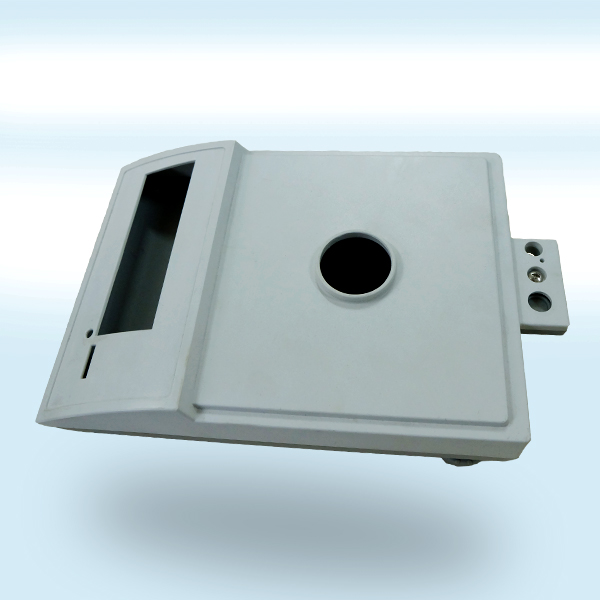
The body shell, as the core structural component, is formed by single or double cavity injection molding using impact resistant ABS or reinforced nylon materials. The mold cavity is designed with multiple sets of reinforcing ribs, and is equipped with a conformal cooling water channel to ensure uniform wall thickness (usually 3-5mm) after molding, avoiding warping and deformation; The surface of the shell is etched with fine sand patterns through a mold to enhance its wear and scratch resistance. Even if it is subjected to long-term friction from shopping bags or product collisions, it is not easy to produce obvious scratches. The operation panel, as the core of human-computer interaction, is made of high-precision injection molds. The tolerance of the button holes is controlled within ± 0.01mm, and the correct assembly with the buttons and touch screen is ensured through the guide column positioning structure. The panel edge is designed with rounded corners to prevent users from being bumped and injured during operation, and to enhance the overall structural strength.
As a direct load-bearing component, the scale pan is molded using a large cavity injection mold, made of thickened PP or ABS material. The bottom of the mold is pre-set with dense reinforcement ribs and anti slip textures (grid or dot patterns). At the same time, the exhaust system is optimized to avoid bubbles during molding, ensuring that the weight of the scale pan is evenly distributed and not easy to slide when placing goods. The thickened structure can withstand a drop impact at a height of 1.5 meters, which is suitable for frequent handling and collision needs in retail scenes. The battery compartment cover and junction box housing are made of embedded injection molds, which integrate metal nut inserts to enhance connection strength. The mold is designed with reserved sealing grooves, and the assembled sealing performance of the components can reach IP54+after molding, effectively preventing internal circuit short circuits caused by humid environments and beverage spills in supermarkets. The buckle structure is designed with guide angles to ensure that it is not easy to fall off during frequent opening and closing, extending its service life.
In addition, in response to the large-scale supply demand of retail terminals, this type of mold is generally equipped with a hot runner system, which controls the injection cycle at 20-30 seconds per mold. The daily production capacity of a single cavity mold can reach 500-800 pieces. At the same time, the development cost of a single mold set is reduced through the design of a shared mold frame for multiple cavities, and the mold structure is optimized to reduce the subsequent polishing and trimming processes of the product, further controlling production costs.
2���、 Logistics and warehousing field: Application of molds for express scales/warehousing scales
The core requirements for equipment such as electronic scales in logistics and express delivery outlets, warehouse weighing QR code scanning machines, and freight weighing scales (small) are strong load-bearing capacity, seismic resistance, and adaptability to integrated functions. Electronic scale molds need to balance structural strength and correct molding of multifunctional components.
The base of the scale body, as the load-bearing core, is formed by heavy-duty injection molding using high-strength reinforced nylon+fiberglass composite materials. The mold cavity is designed with a three-dimensional reinforced rib network, and some key stress bearing parts are integrated with metal inserts using insert injection molding technology to ensure that the base can withstand weighing pressures of 50-300kg and resist impacts caused by package throwing and equipment movement in logistics scenarios. The weighing platform (scale pan) adopts a large-sized cavity mold, with anti slip convex points and edge anti overflow blocking edges designed on the surface. The mold cooling system is optimized for zone cooling to avoid warping of large areas due to uneven cooling, ensuring that the flatness error of the weighing platform is ≤ 0.03mm and guaranteeing measurement accuracy.
The molding of integrated components is the core highlight of molds in this field: the integrated mold of the scanning bracket and the scale body achieves seamless connection between the bracket and the scale body through complex cavity design, avoiding loosening problems during subsequent assembly and adapting to the synchronous operation of scanning and weighing in logistics scenarios; The junction box and sensor protective cover adopt a sealed mold cavity design, and the molded parts have no gaps. The protection level can reach IP65+, effectively resisting dust and water vapor erosion in the storage environment, and protecting the internal sensors and circuits. In response to the high-frequency movement of logistics equipment, the mold design optimized the assembly clearance of components to ensure that structural looseness is not easily caused during transportation bumps. At the same time, wear-resistant materials were used to form the roller mounting seat, improving the overall durability of the equipment.
3、 Industrial metrology field: Application of molds for industrial platform scales/explosion-proof scales
Equipment such as batching scales in factory workshops, explosion-proof scales in the chemical industry, and heavy-duty scales in heavy industry need to cope with special scenarios such as high pressure, high temperature, corrosion, and explosion prevention. The design core of electronic scale molds is "special material adaptation+industry standard compliance".
The protective shell of the industrial platform scale is formed by thick walled injection molding, using impact resistant and chemically corrosion-resistant PPS or modified ABS materials. The mold cavity is designed with thickened side walls and reinforcing ribs to ensure that the protective shell can withstand heavy object impacts and chemical media erosion in industrial environments; The sensor mounting base adopts an embedded injection mold, which integrates the metal compression resistant insert with the plastic shell to improve the compression and seismic performance of the mounting base and ensure the measurement accuracy of the sensor under heavy load conditions.
As a special equipment, the mold design of the explosion-proof scale strictly follows the Ex explosion-proof standard. The shell mold adopts a sealed cavity structure, and the formed shell has no obvious gaps. At the same time, an explosion-proof pressure relief groove is reserved to ensure safe pressure relief under special working conditions; The junction box and observation window molds are made of high temperature resistant and anti-static materials, while the observation window is made of high transparency PC material. The mold is processed with high precision to ensure a sealed fit between the observation window and the outer shell, preventing flammable gases from entering the interior of the equipment. For high-temperature scenarios such as chemical and metallurgical industries, molds are adapted to high-temperature resistant plastic materials (such as PEEK), optimizing cooling systems and exhaust structures to avoid defects during high-temperature material molding and ensure that components can maintain structural stability in environments above 100 ℃.
4��、 In the field of catering services: Application of molds for commercial kitchen scales/bar scales
The core requirements for equipment such as restaurant kitchen ingredient scales, milk tea shop bar scales, and bakery correct scales are compact, portable, easy to clean, oil proof, and accurate measurement. The design of electronic scale molds revolves around "lightweight+practical function adaptation".
The body shell of the kitchen scale is molded using lightweight injection molds, made of food grade ABS (compliant with FDA standards). The surface of the mold cavity is polished to a mirror finish (Ra ≤ 0.01 μ m). After molding, the shell is smooth without dead corners, making it easy to clean oil stains. At the same time, waterproof edges are designed to prevent kitchen water stains from infiltrating the internal circuit. The scale pan is formed using food grade PP material molds, with anti overflow grooves and anti slip textures on the surface design, which not only avoids ingredient spillage but also facilitates cleaning. The mold optimizes the assembly structure between the scale pan and the body, allowing for quick disassembly and cleaning.
The mold of the bar scale pays more attention to the integration of appearance and function: the body adopts a streamlined cavity design, matched with a metal texture spray texture mold, to enhance the beauty of the product and adapt to the decoration style of milk tea shops and baking shops; The button mold adopts a dual color injection molding process, and the formed buttons have anti slip protrusions and clear markings. The pressing force is controlled between 1.5-2N to ensure comfortable hand feel and smooth rebound during frequent operation; The display panel mold is made of high transparency PC material, with anti scratch coating on the edges and reserved shading structure to avoid the impact of strong light environment in the kitchen and bar on the clarity of readings.
5���、 The core application value of commercial electronic scale molds
The application of electronic scale molds in the commercial electronics field is essentially to transform the functional requirements of commercial scenarios into mass-produced components through correct structural design, material adaptation, and process optimization. For equipment manufacturers, the high-precision batch production stability of molds can improve product assembly accuracy, reduce after-sales failures (such as structural looseness and measurement deviation), and reduce unit production costs through technological optimization such as multi cavity and hot runner; For end users, commercial electronic scales formed by excellent molds have a stable structure, easy operation, and strong durability, which can adapt to the complex needs of different commercial scenarios and improve operational efficiency; For the industry, the upgrading of mold technology (such as integrated molding and special material adaptation) promotes the development of commercial electronic scales towards integration, specialization, and high cost-effectiveness, meeting the personalized measurement needs of retail, logistics, industry, catering and other fields.




 Home
Home
 Product
 Wechat
 Telephone